








Hva en britisk familie opplevde da de ble rammet av Erdheim-Chester-syndromet.
Av Chesnee Green
13. september 2018
Pasienter med Erdheim-Chester-syndrom (ECD) kjemper en daglig kamp for sin psykiske og fysiske helse. På samme måte kjemper også omsorgspersonene en daglig kamp. Ofte blir historien bak kulissene – bak sykdommen – ikke fortalt eller hørt. En omsorgsperson har vennligst gått med på å fortelle den kompliserte historien bak kulissene som omsorgspersoner står overfor hver dag.
Lynda Rowlands fortelling gir et detaljert innblikk i hennes liv som omsorgsperson for sin elskede søster Glenda og de utfordringene familien måtte takle.
Nearly ten years prior to Glenda’s diagnosis and twelve years prior to her untimely death, her ECD journey began. Lynda and family members began to notice slight changes in Glenda’s behavior, such as eating outdated foods, leaving cooking surfaces on, not getting off the bus at her regular stops that she had been using for 13-years, constant thirst, and constantly feeling like she had flu-symptoms. Glenda would even do strange things followed by inappropriate laughter.
Being a normal, sweet, hard-working middle-aged woman, these actions were simply out of the norm, strange, and concerning. The family would call Glenda “dozey” and said that it was just her “funny age.” Unfortunately, these “funny age” actions only worsened and caused even more concern to the family. The excessive thirst was so intense, Glenda began drinking anything and everything that she could get her hands on. Her balance was also becoming less controllable. These two symptoms together left Lynda to think that her sister had just became an alcoholic. Little did they know at the time this was not the case.
Due to government cutbacks, medical resources were not readily available. Lynda thought that a brain tumor could be the cause of Glenda’s new rash behaviors. With a lack of government funding and her doctors believing it was a brain bleed, there were no further tests and believed that it would go away with time.
Like many others, the symptoms didn’t go away, rather they worsened and so did the stress on the family. The symptoms compiled: coughing/choking when eating or drinking, no balance and falling over, bladder failure, bowel incontinence, excessive drooling, more infections, hallucinations, and even more hospitalizations. At one point they catheterized Glenda, which only created more issues. Glenda would tug at the catheter, empty it at inappropriate times and places, or simply didn’t empty it at all. This was very taxing on the family. At this point, she was diagnosed with multi-infarct dementia.
Mens familien slet, lette de etter hjelp! Glenda var i 50-årene på den tiden, og det fantes rett og slett ingen støttegruppe som passet hennes aldersgruppe eller familiens behov. Den eneste støtten som var tilgjengelig, ga egentlig ingen lettelse. Fordi Glenda ble ansett som mentalt i stand til å ta egne beslutninger, satte hun seg ofte fast i mat og drikke mens hun var under oppsyn av disse omsorgspersonene. Selv om familien hadde fortalt omsorgspersonene at Glenda ikke kunne spise eller drikke visse ting, var omsorgspersonen forpliktet til å følge Glendas ønsker og behov.
After nearly 10 years of struggling, “Then the real stuff started to kick in…” says Lynda. Glenda could no longer walk, was doubly incontinent, had a damaged throat from regular choking, and a body structure that mimicked multiple sclerosis. Seeing doctor after doctor, as well as Lynda and the family’s persistence, finally paid-off. They were given a proper diagnosis of Erdheim-Chester Disease.
The diagnosis came as a total shock, after so many years of heartache and not knowing what they were dealing with. Living in the unknown can be very challenging on the body and the mind, but the diagnosis didn’t end the struggle. The diagnosis was not found soon enough to benefit from the drugs that help ECD patients regain some control of their health.
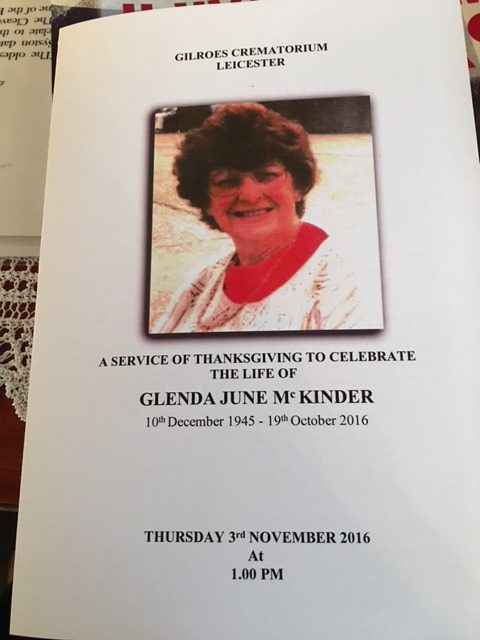
Glenda måtte snart flyttes til et sykehjem. Glendas døtre ble så redde for at hun skulle kveles til døde, at det bokstavelig talt ble et levende mareritt for familien. Uken før Glenda døde, fortalte hun Lynda at hun var lei av det hele, lei av å kjempe. Den 19. oktober 2016, på niesen sin bursdag, gikk Glenda bort.
ECD is not only a battle for the patient, it is a struggle for the caregivers and families that surround them. Early diagnosis is very important for ECD patients, as the long-term damage to their organs can often not be reversed.
“Omsorg er en tilstand der noe faktisk betyr noe; den er kilden til menneskelig ømhet.” – Rollo May