













Le parcours d'une famille britannique confrontée à la maladie d'Erdheim-Chester.
Par Chesnee Green
13 septembre 2018
Les patients atteints de la maladie d'Erdheim-Chester (ECD) mènent un combat quotidien pour préserver leur santé mentale et physique. De même, leurs aidants mènent eux aussi un combat quotidien. Souvent, l'histoire qui se cache derrière les coulisses de la maladie n'est ni racontée ni entendue. Une aidante a bien voulu nous raconter l’histoire complexe, celle des coulisses, à laquelle les aidants sont confrontés chaque jour.
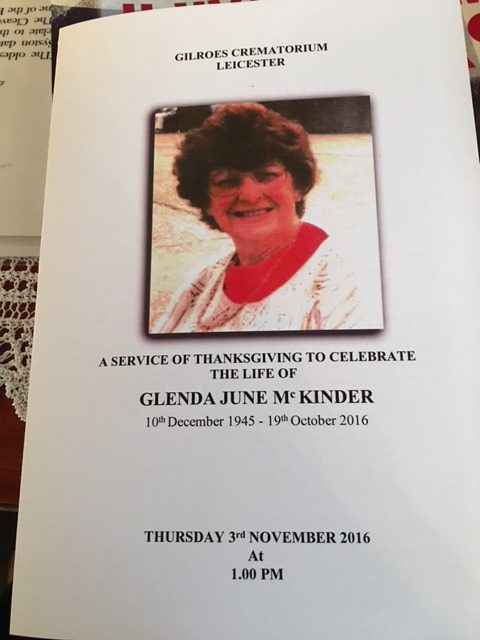
Le récit de Lynda Rowland retrace sa vie en tant qu'aidante auprès de sa sœur bien-aimée, Glenda, ainsi que les épreuves auxquelles la famille a dû faire face.
Nearly ten years prior to Glenda’s diagnosis and twelve years prior to her untimely death, her ECD journey began. Lynda and family members began to notice slight changes in Glenda’s behavior, such as eating outdated foods, leaving cooking surfaces on, not getting off the bus at her regular stops that she had been using for 13-years, constant thirst, and constantly feeling like she had flu-symptoms. Glenda would even do strange things followed by inappropriate laughter.
Being a normal, sweet, hard-working middle-aged woman, these actions were simply out of the norm, strange, and concerning. The family would call Glenda “dozey” and said that it was just her “funny age.” Unfortunately, these “funny age” actions only worsened and caused even more concern to the family. The excessive thirst was so intense, Glenda began drinking anything and everything that she could get her hands on. Her balance was also becoming less controllable. These two symptoms together left Lynda to think that her sister had just became an alcoholic. Little did they know at the time this was not the case.
Due to government cutbacks, medical resources were not readily available. Lynda thought that a brain tumor could be the cause of Glenda’s new rash behaviors. With a lack of government funding and her doctors believing it was a brain bleed, there were no further tests and believed that it would go away with time.
Like many others, the symptoms didn’t go away, rather they worsened and so did the stress on the family. The symptoms compiled: coughing/choking when eating or drinking, no balance and falling over, bladder failure, bowel incontinence, excessive drooling, more infections, hallucinations, and even more hospitalizations. At one point they catheterized Glenda, which only created more issues. Glenda would tug at the catheter, empty it at inappropriate times and places, or simply didn’t empty it at all. This was very taxing on the family. At this point, she was diagnosed with multi-infarct dementia.
Alors que la famille traversait cette épreuve, elle cherchait de l’aide ! Glenda avait alors une cinquantaine d’années et il n’existait tout simplement aucun groupe de soutien adapté à sa tranche d’âge ni aux besoins de la famille. Le seul soutien disponible ne lui apportait en réalité aucun répit. Comme Glenda était considérée comme mentalement capable de prendre ses propres décisions, elle s'étouffait souvent avec de la nourriture ou des boissons lorsqu'elle était sous la garde de ces aidants. Bien que la famille ait précisé aux aidants que Glenda ne pouvait pas consommer certains aliments ou boissons, ceux-ci étaient tenus de se plier aux envies et aux besoins de Glenda.
After nearly 10 years of struggling, “Then the real stuff started to kick in…” says Lynda. Glenda could no longer walk, was doubly incontinent, had a damaged throat from regular choking, and a body structure that mimicked multiple sclerosis. Seeing doctor after doctor, as well as Lynda and the family’s persistence, finally paid-off. They were given a proper diagnosis of Erdheim-Chester Disease.
The diagnosis came as a total shock, after so many years of heartache and not knowing what they were dealing with. Living in the unknown can be very challenging on the body and the mind, but the diagnosis didn’t end the struggle. The diagnosis was not found soon enough to benefit from the drugs that help ECD patients regain some control of their health.
Glenda allait bientôt devoir être placée dans une maison de retraite. Ses filles étaient tellement terrifiées à l’idée qu’elle puisse mourir étouffée que cela était littéralement devenu un véritable cauchemar pour toute la famille. La semaine précédant son décès, Glenda a confié à Lynda qu’elle en avait assez, qu’elle était fatiguée de se battre. Le 19 octobre 2016, le jour de l'anniversaire de sa nièce, Glenda s'est éteinte.
ECD is not only a battle for the patient, it is a struggle for the caregivers and families that surround them. Early diagnosis is very important for ECD patients, as the long-term damage to their organs can often not be reversed.
“ L’attention est un état dans lequel quelque chose a de l’importance ; c’est la source de la tendresse humaine. ” – Rollo May