












Wat een Britse familie meemaakte toen ze te maken kreeg met de ziekte van Erdheim-Chester.
Door Chesnee Green
13 september 2018
Patiënten met de ziekte van Erdheim-Chester (ECD) voeren dagelijks een strijd om hun geestelijke en lichamelijke gezondheid. Ook de zorgverleners voeren dagelijks een strijd. Vaak wordt het verhaal achter de schermen, achter de ziekte, niet verteld of gehoord. Eén verzorger was zo vriendelijk om het ingewikkelde verhaal achter de schermen te vertellen waarmee verzorgers dagelijks worden geconfronteerd.
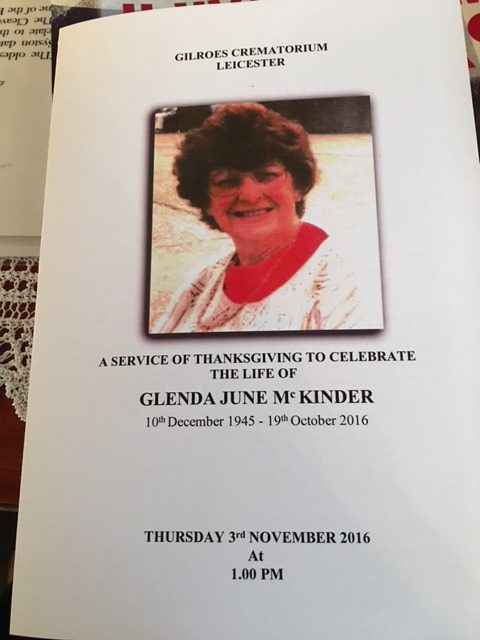
In het verhaal van Lynda Rowland wordt haar leven als verzorgster van haar geliefde zus Glenda beschreven, evenals de moeilijkheden waarmee het gezin te maken kreeg.
Nearly ten years prior to Glenda’s diagnosis and twelve years prior to her untimely death, her ECD journey began. Lynda and family members began to notice slight changes in Glenda’s behavior, such as eating outdated foods, leaving cooking surfaces on, not getting off the bus at her regular stops that she had been using for 13-years, constant thirst, and constantly feeling like she had flu-symptoms. Glenda would even do strange things followed by inappropriate laughter.
Being a normal, sweet, hard-working middle-aged woman, these actions were simply out of the norm, strange, and concerning. The family would call Glenda “dozey” and said that it was just her “funny age.” Unfortunately, these “funny age” actions only worsened and caused even more concern to the family. The excessive thirst was so intense, Glenda began drinking anything and everything that she could get her hands on. Her balance was also becoming less controllable. These two symptoms together left Lynda to think that her sister had just became an alcoholic. Little did they know at the time this was not the case.
Due to government cutbacks, medical resources were not readily available. Lynda thought that a brain tumor could be the cause of Glenda’s new rash behaviors. With a lack of government funding and her doctors believing it was a brain bleed, there were no further tests and believed that it would go away with time.
Like many others, the symptoms didn’t go away, rather they worsened and so did the stress on the family. The symptoms compiled: coughing/choking when eating or drinking, no balance and falling over, bladder failure, bowel incontinence, excessive drooling, more infections, hallucinations, and even more hospitalizations. At one point they catheterized Glenda, which only created more issues. Glenda would tug at the catheter, empty it at inappropriate times and places, or simply didn’t empty it at all. This was very taxing on the family. At this point, she was diagnosed with multi-infarct dementia.
Terwijl de familie het moeilijk had, gingen ze op zoek naar hulp! Glenda was toen in de vijftig en er was simpelweg geen enkele steungroep die aansloot bij haar leeftijdsgroep of bij de behoeften van de familie. De enige beschikbare ondersteuning bood eigenlijk geen soelaas. Omdat Glenda geestelijk in staat werd geacht om haar eigen beslissingen te nemen, verslikte ze zich vaak in eten en drinken terwijl ze onder de hoede van deze zorgverleners was. Hoewel de familie de zorgverleners had verteld dat Glenda bepaalde soorten eten of drinken niet mocht hebben, was de zorgverlener verplicht om de wensen en behoeften van Glenda te volgen.
After nearly 10 years of struggling, “Then the real stuff started to kick in…” says Lynda. Glenda could no longer walk, was doubly incontinent, had a damaged throat from regular choking, and a body structure that mimicked multiple sclerosis. Seeing doctor after doctor, as well as Lynda and the family’s persistence, finally paid-off. They were given a proper diagnosis of Erdheim-Chester Disease.
The diagnosis came as a total shock, after so many years of heartache and not knowing what they were dealing with. Living in the unknown can be very challenging on the body and the mind, but the diagnosis didn’t end the struggle. The diagnosis was not found soon enough to benefit from the drugs that help ECD patients regain some control of their health.
Glenda zou binnenkort naar een verpleeghuis moeten worden overgebracht. Glenda’s dochters waren zo bang dat ze zou stikken, dat het letterlijk een levende nachtmerrie voor het gezin werd. De week voordat Glenda stierf, vertelde ze Lynda dat ze er genoeg van had, genoeg van het vechten. Op 19 oktober 2016, op de verjaardag van haar nichtje, is Glenda overleden.
ECD is not only a battle for the patient, it is a struggle for the caregivers and families that surround them. Early diagnosis is very important for ECD patients, as the long-term damage to their organs can often not be reversed.
“Zorg is een toestand waarin iets er wel degelijk toe doet; het is de bron van menselijke tederheid.” – Rollo May