








De jongen met de ziekte van Erdheim-Chester
Bij een 15-jarige wordt een uiterst zeldzame vorm van bloedkanker vastgesteld die vooral bij volwassenen voorkomt, en hij overleeft het om het verhaal te kunnen vertellen
Door Elizabeth S. Anderson, ECD Global Alliance
13 juli 2017
“Ken je nog andere jongvolwassenen met de ziekte van Erdheim-Chester?” vroeg ik aan Michael Oliver over zijn uiterst zeldzame ziekte. “Geen,” antwoordde hij.
Michael is now 17 years old, but he was 15 when he was finally diagnosed with Erdheim-Chester disease (ECD). ECD is a very rare type of blood cancer that can affect several organs in the body, including the brain and can progress to be life threatening, especially if left untreated. What’s especially unusual about Michael, is that he is one of a handful of young adults and children dealing with a disease that predominately affects men and women in middle age. This makes Michael’s ECD diagnosis even rarer than normal.
De jonge inwoner van Stafford, Virginia, leidt tegenwoordig naar alle waarschijnlijkheid het leven van een gewone tiener die zich voorbereidt op een opleiding tot verpleegkundige. Hij brengt graag tijd door met zijn drie jongere broers en zussen, speelt basketbal en heeft zelfs zijn eigen chihuahua-bichon-kruising, Ghost, waar hij met veel plezier voor zorgt. Al sinds zijn jeugd is Michael erg ziek. Tegenwoordig is zijn ECD echter stabiel dankzij zijn deelname aan een klinische geneesmiddelenstudie.
“We had gone to his pediatrician from the time he was twelve because Michael started having some very strange symptoms.” Michael’s mother, Jessica Colon, recalls how the ECD diagnosis journey started. “He was in sports. He was always running, he was always doing things, so the pediatrician just chalked it up as growing pains and just being a teenager.”
Michael suffered from debilitating headaches, light-headiness when being active, bone pain, and was losing weight despite his and his mother’s efforts to ensure he was increasing his protein intake. Of all the symptoms Michael dealt with, it was the amount of water he would drink that was most alarming to Jessica. She remembers, “He started drinking gallons of water. So, I thought maybe he should be tested for diabetes, but the pediatrician said there was nothing wrong with him.”
Uiteindelijk, op nieuwjaarsdag 2015, werden Michaels pijn en ziekte ondraaglijk en bracht Jessica haar zoon naar een spoedeisende hulp. Ze geeft toe: “Ik smeekte de medewerkster van de spoedeisende hulp gewoon. Ik zei: ”Help me alsjeblieft! Ik weet niet wat er met mijn zoon aan de hand is, maar er is iets mis met hem!’ Deze keer luisterde de medewerkster.
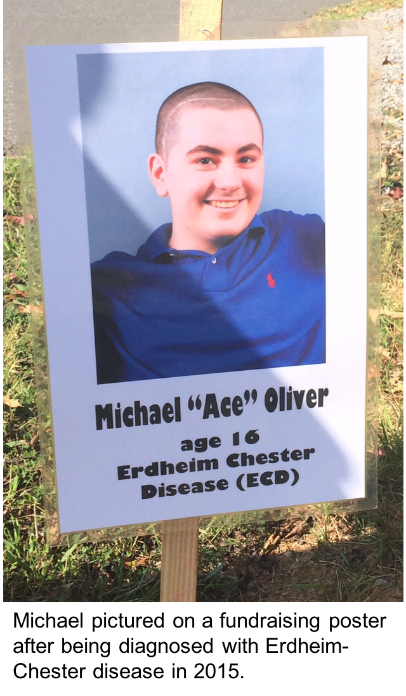
It would be months before physicians would arrive to Michael’s unlikely, but certain ECD diagnosis after performing pituitary and brain tumor biopsies later that year. Mother’s Day of 2015, when Jessica was in the hospital with her youngest child due to a heart condition and after Michael’s second brain biopsy, ECD was confirmed.
Jessica retells Michael’s reaction to his diagnosis. “I remember clearly when Michael said, ‘At least I know I’m not crazy. Something is wrong with me. I’m glad it’s me and not my brother and sister because I’m strong enough to deal with this.’”
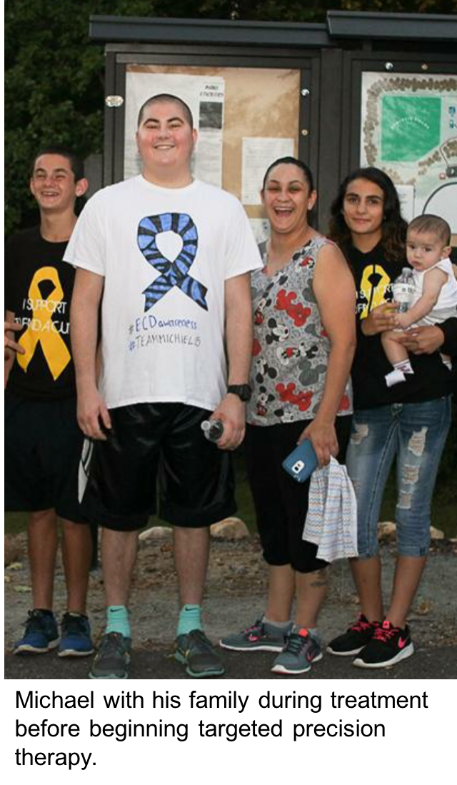 From the time he started getting sick, until being admitted into a clinical trial for treatment in 2016, Michael struggled with the change in his life that this condition forced upon him. Once he finally received a diagnosis, his doctors placed him on steroids and chemotherapy. They believed it would help eradicate the cancer, but matters only worsened. Before the treatment, he could participate in basketball, football, and school. As his illness progressed, hospital stays for biopsies increased, and medications to treat the illness ensued, he needed to quit sports and he missed so much school that he was in jeopardy of not completing high school. Michael recollects what it was like to be so sick. “I would say that time was probably the worst time I’ve experienced being sick. It was difficult because the medicine was making me emotional and then I gained a lot of weight.”
Gelukkig ging het daarna beter. Een vriend van de familie bracht Jessica en Michael in contact met dr. Eli L. Diamond, een arts bij het ECD Global Alliance Referral Care Center van het Memorial Sloan-Kettering Cancer Center. Dr. Diamond overlegde met Michaels artsen over een aanpassing van zijn behandelplan naar een experimentele vorm van precisiegeneeskunde. De nieuwe therapie leverde positieve resultaten op bij volwassen patiënten en dr. Diamond was van mening dat dit een goede optie voor Michael zou kunnen zijn.
Michael has been on the experimental therapy through Children’s National Medical Center in Washington, D.C. for over a year now and reports optimistic results. Michael enthusiastically reports, “It is the best thing. It’s amazing. It’s targeted. So, there’s much less symptoms but my leg [tumors] have nearly cleared up and my brain tumors are stable, so it’s amazing.”
The ECD Global Alliance (ECDGA), the only non-profit dedicated to supporting those affected by ECD, only has 16 pediatric-diagnosed ECD patients registered out of a total of 442 cases. ECD is not a disease that researchers believe commonly affects children; however, it is related to Langerhans Cell histiocytosis (LCH), which is commonly found in children. There is a belief that ECD could be more prevalent than it is reported due to misdiagnosis, since symptoms can be attributed to other diseases. Therefore, there could be more children and adolescents suffering with ECD than thought.
The Alliance funds research and annual symposia to connect ECD-knowledgeable and interested medical professionals to further understand and treat ECD. It was through the ECDGA’s resources, the family friend had been able to discover Dr. Diamond and it is through the organization that both Michael and Jessica have been able to find emotional support from the organization’s member community.
Although Michael has never connected with another young ECD patient, he has found support through a correspondence relationship with another adult ECD patient. Jessica discusses the relationship. “They were pen pals. They would send emails to each other all the time. They just decided to write one another and then before you know it they were always emailing each other through both their treatments. And not necessarily about ECD but just talking about life. And at that time, it actually really helped because Michael was so depressed. And he was going through so much, and it was hard for me to talk to him, because I didn’t know how he was feeling.”
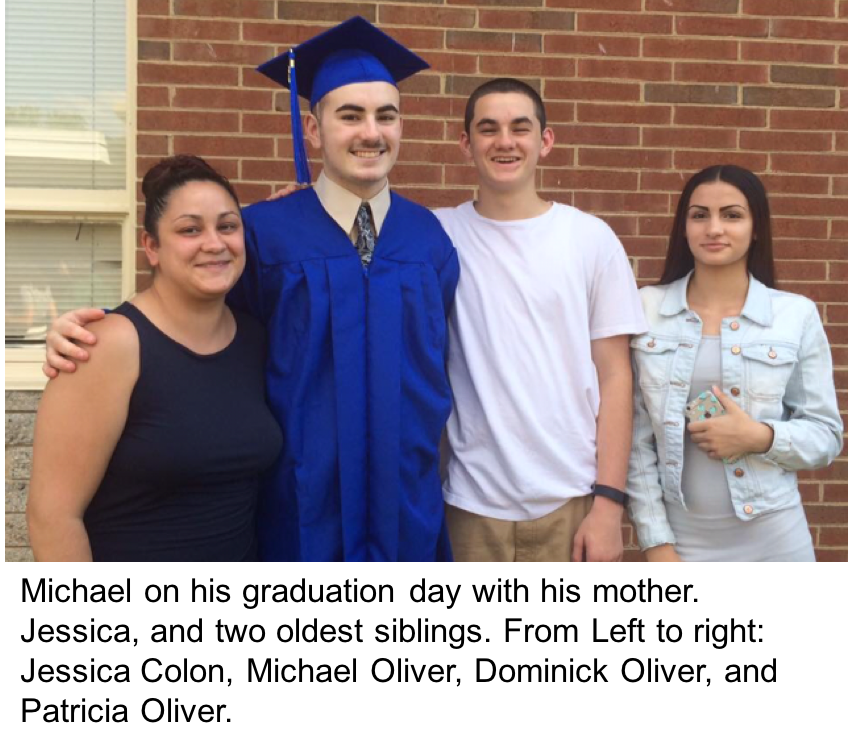
Jessica vond ook troost in het praten met andere verzorgers via de ECD Caregivers Group van de ECDGA, een online chatgemeenschap van ECD-verzorgers die elkaar ondersteunen. Jessica legt uit waarom de online steungroep zo nuttig voor haar is geweest. “Er waren momenten dat ik gewoon niet meer wist wat ik moest doen. En als ik niet ”s avonds laat met hen had kunnen praten, zou ik bijna elke nacht mezelf in slaap hebben gehuild. Maar ze hebben me door zoveel heen geholpen.”
Naast het financieren van onderzoek, het organiseren van medische symposia en het bevorderen van contacten tussen de medische gemeenschap, patiënten en zorgverleners op het gebied van ECD, organiseert de ECDGA ook een jaarlijkse conferentie, de „Patient and Family Gathering”, die gericht is op voorlichting en het smeden van banden. Michael en Jessica kijken er allebei naar uit om het evenement in oktober aanstaande in New York City bij te wonen en voor het eerst anderen te ontmoeten die door deze uiterst zeldzame ziekte zijn getroffen.
De ervaringen van Michael en Jessica met ECD waren ingewikkeld en zwaar, maar ze hebben allebei belangrijke levenslessen geleerd uit wat ze hebben doorstaan. Michael heeft ontdekt dat hij over meer kracht en doorzettingsvermogen beschikt dan hij dacht. Hij zegt: “Ik realiseerde me dat ik meer kan dan ik denk. En dat zou ik ook tegen mijn broers en zussen kunnen zeggen. Het had heel goed kunnen gebeuren dat ik de middelbare school nooit had afgemaakt, maar het is me toch gelukt. Dus ben ik tegen mijn broers en zussen gaan zeggen: geef je niet gewonnen.”
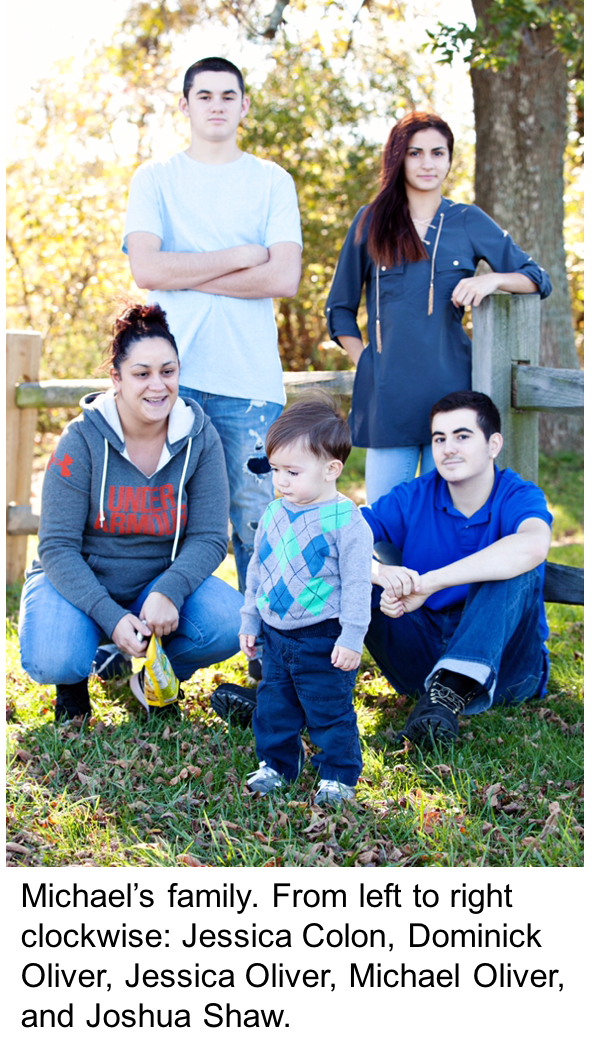
Jessica heeft als moeder ook een nieuwe kijk op doorzettingsvermogen gekregen. Ze geeft andere ouders die te maken hebben met een ernstig ziek kind het volgende advies: “Zelfs als je je kind naar een arts brengt, en zelfs als je te horen krijgt dat er niets aan de hand is, en je echt, oprecht het gevoel hebt dat er wel iets aan de hand is – geef dan niet op. Volg gewoon je gevoel en geef niet op. Accepteer nooit dat er niets aan de hand is, totdat je echt alle mogelijkheden hebt uitgeput en je werkelijk alle onderzoeken hebt laten doen en alles hebt geprobeerd.”
Als u meer wilt weten over de ziekte van Erdheim-Chester of denkt dat u of iemand die u dierbaar is mogelijk aan ECD lijdt, ga dan naar www.Erdheim-Chester.org. De website van de ECD Global Alliance is dé belangrijkste bron voor patiënten, familieleden en medische professionals om met elkaar in contact te komen en hulp te krijgen bij de strijd tegen de ziekte van Erdheim-Chester.