



Gutten med Erdheim-Chester-syndromet
En 15-åring får diagnosen en ekstremt sjelden form for blodkreft som hovedsakelig forekommer hos voksne, og overlever for å fortelle historien
Av Elizabeth S. Anderson, ECD Global Alliance
13. juli 2017
“Kjenner du noen andre unge voksne med Erdheim-Chester-syndromet?” spurte jeg Michael Oliver om hans ekstremt sjeldne sykdom. “Ingen,” svarte han.
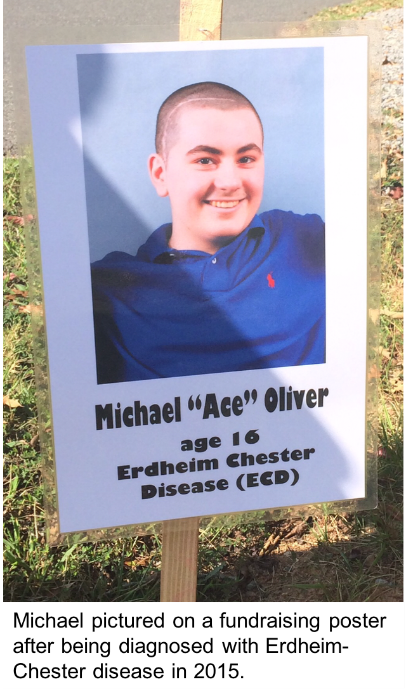
Michael is now 17 years old, but he was 15 when he was finally diagnosed with Erdheim-Chester disease (ECD). ECD is a very rare type of blood cancer that can affect several organs in the body, including the brain and can progress to be life threatening, especially if left untreated. What’s especially unusual about Michael, is that he is one of a handful of young adults and children dealing with a disease that predominately affects men and women in middle age. This makes Michael’s ECD diagnosis even rarer than normal.
Den unge Stafford, som i dag bor i Virginia, lever etter alt å dømme et liv som en vanlig tenåring som forbereder seg på å studere til sykepleier. Han elsker å tilbringe tid med sine tre yngre søsken, spiller basketball og har til og med sin egen Chihuahua-Bichon-blanding, Ghost, som han nyter å ta seg av. Michael har vært svært syk helt siden han var liten. I dag er imidlertid ECD-tilstanden hans stabil takket være hans deltakelse i en klinisk legemiddelstudie.
“We had gone to his pediatrician from the time he was twelve because Michael started having some very strange symptoms.” Michael’s mother, Jessica Colon, recalls how the ECD diagnosis journey started. “He was in sports. He was always running, he was always doing things, so the pediatrician just chalked it up as growing pains and just being a teenager.”
Michael suffered from debilitating headaches, light-headiness when being active, bone pain, and was losing weight despite his and his mother’s efforts to ensure he was increasing his protein intake. Of all the symptoms Michael dealt with, it was the amount of water he would drink that was most alarming to Jessica. She remembers, “He started drinking gallons of water. So, I thought maybe he should be tested for diabetes, but the pediatrician said there was nothing wrong with him.”
Til slutt, på nyttårsdag i 2015, ble Michaels smerter og sykdom så uutholdelige at Jessica tok sønnen med til en akuttmottaksklinikk. Hun innrømmer: “Jeg tryglet bare damen på akuttmottaket. Jeg sa: ”Vær så snill, bare hjelp meg! Jeg vet ikke hva som er galt med sønnen min, men noe er galt med ham!» Denne gangen lyttet helsepersonellet.
It would be months before physicians would arrive to Michael’s unlikely, but certain ECD diagnosis after performing pituitary and brain tumor biopsies later that year. Mother’s Day of 2015, when Jessica was in the hospital with her youngest child due to a heart condition and after Michael’s second brain biopsy, ECD was confirmed.
Jessica retells Michael’s reaction to his diagnosis. “I remember clearly when Michael said, ‘At least I know I’m not crazy. Something is wrong with me. I’m glad it’s me and not my brother and sister because I’m strong enough to deal with this.’”
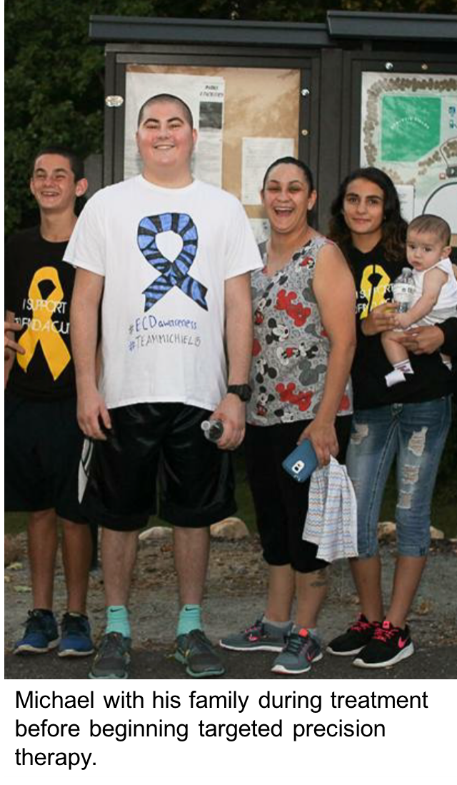 From the time he started getting sick, until being admitted into a clinical trial for treatment in 2016, Michael struggled with the change in his life that this condition forced upon him. Once he finally received a diagnosis, his doctors placed him on steroids and chemotherapy. They believed it would help eradicate the cancer, but matters only worsened. Before the treatment, he could participate in basketball, football, and school. As his illness progressed, hospital stays for biopsies increased, and medications to treat the illness ensued, he needed to quit sports and he missed so much school that he was in jeopardy of not completing high school. Michael recollects what it was like to be so sick. “I would say that time was probably the worst time I’ve experienced being sick. It was difficult because the medicine was making me emotional and then I gained a lot of weight.”
Heldigvis tok ting seg til det bedre. En venn av familien satte Jessica og Michael i kontakt med legen Eli L. Diamond ved ECD Global Alliance Referral Care Center, som jobber ved Memorial Sloan-Kettering Cancer Center. Dr. Diamond rådførte seg med Michaels leger om å endre behandlingsplanen hans til en eksperimentell presisjonsmedisin. Den nye behandlingen viste positive resultater hos voksne pasienter, og dr. Diamond mente at dette kunne være et godt alternativ for Michael.
Michael has been on the experimental therapy through Children’s National Medical Center in Washington, D.C. for over a year now and reports optimistic results. Michael enthusiastically reports, “It is the best thing. It’s amazing. It’s targeted. So, there’s much less symptoms but my leg [tumors] have nearly cleared up and my brain tumors are stable, so it’s amazing.”
The ECD Global Alliance (ECDGA), the only non-profit dedicated to supporting those affected by ECD, only has 16 pediatric-diagnosed ECD patients registered out of a total of 442 cases. ECD is not a disease that researchers believe commonly affects children; however, it is related to Langerhans Cell histiocytosis (LCH), which is commonly found in children. There is a belief that ECD could be more prevalent than it is reported due to misdiagnosis, since symptoms can be attributed to other diseases. Therefore, there could be more children and adolescents suffering with ECD than thought.
The Alliance funds research and annual symposia to connect ECD-knowledgeable and interested medical professionals to further understand and treat ECD. It was through the ECDGA’s resources, the family friend had been able to discover Dr. Diamond and it is through the organization that both Michael and Jessica have been able to find emotional support from the organization’s member community.
Although Michael has never connected with another young ECD patient, he has found support through a correspondence relationship with another adult ECD patient. Jessica discusses the relationship. “They were pen pals. They would send emails to each other all the time. They just decided to write one another and then before you know it they were always emailing each other through both their treatments. And not necessarily about ECD but just talking about life. And at that time, it actually really helped because Michael was so depressed. And he was going through so much, and it was hard for me to talk to him, because I didn’t know how he was feeling.”
Jessica fant også trøst i å snakke med andre omsorgspersoner gjennom ECDGAs “ECD Caregivers Group”, et nettbasert chattfellesskap bestående av ECD-omsorgspersoner som støtter hverandre. Jessica forklarer hvorfor den nettbaserte støttegruppen har vært til stor hjelp. «Det var tider da jeg rett og slett ikke visste hva jeg skulle gjøre lenger. Og hadde det ikke vært for samtalene med dem sent på kvelden, ville jeg nesten hver natt bare ha grått meg i søvn. Men de hjalp meg gjennom så mye.»
I tillegg til å finansiere forskning, arrangere medisinske symposier og legge til rette for kontakt mellom ECD-miljøene innen medisin, pasienter og omsorgspersoner, arrangerer ECDGA også en årlig konferanse for pasienter og pårørende, med fokus på opplæring og fellesskap. Både Michael og Jessica gleder seg til å delta på arrangementet i oktober i New York City og til å møte andre som er rammet av denne ekstremt sjeldne sykdommen for første gang.
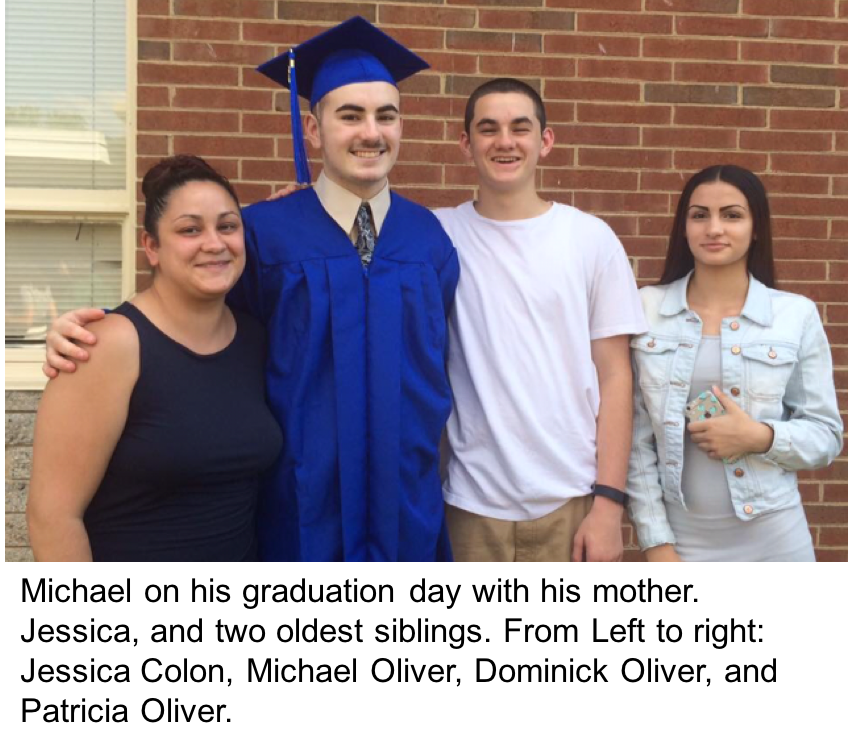
Michael og Jessicas erfaringer med ECD har vært kompliserte og krevende, men de har begge lært viktige livslærdommer av det de har gjennomgått. Michael har oppdaget nye sider ved sin styrke og utholdenhet. Han sier: “Jeg innså at jeg kan klare mer enn jeg tror jeg kan. Og jeg kan si det samme til søsknene mine. Jeg kunne godt ha endt opp med å ikke fullføre videregående, men jeg klarte det. Så jeg begynte å si til søsknene mine: Ikke gi opp.”
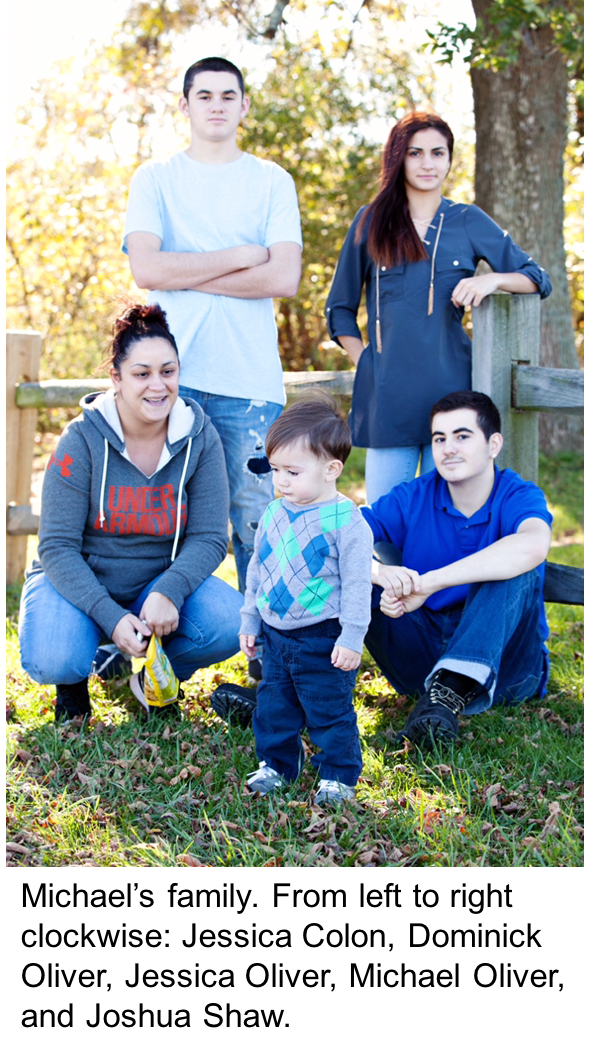
Jessica har også kommet til en ny forståelse av hva utholdenhet innebærer som mor. Hun gir følgende råd til andre foreldre som har et alvorlig sykt barn: “Selv om du tar barnet ditt til legen, og selv om du får høre at det ikke er noe galt, og du virkelig, helt og holdent føler at noe er galt – så må du ikke gi opp. Bare stol på magefølelsen din og ikke gi opp. Aldri godta at det ikke er noe galt før du virkelig har prøvd alle muligheter, og du virkelig har gjennomført alle tester og gjort alt.”
Hvis du ønsker å vite mer om Erdheim-Chester-sykdommen, eller hvis du tror at du eller noen du bryr deg om kan være rammet av ECD, kan du gå inn på www.Erdheim-Chester.org. Nettstedet til ECD Global Alliance er den viktigste kilden for pasienter, pårørende og helsepersonell som ønsker å komme i kontakt med hverandre og få hjelp i kampen mot Erdheim-Chester-syndromet.