


הנער שחלה במחלת ארדהיים-צ'סטר
נער בן 15 אובחן כסובל מסרטן דם נדיר ביותר, הנפוץ בעיקר בקרב מבוגרים, והוא שרד כדי לספר את סיפורו
מאת אליזבת ס. אנדרסון, ECD Global Alliance
13 ביולי 2017
“האם אתה מכיר צעירים נוספים הסובלים ממחלת ארדהיים-צ'סטר?” שאלתי את מייקל אוליבר לגבי המחלה הנדירה ביותר שלו. “אף אחד,” הוא ענה.
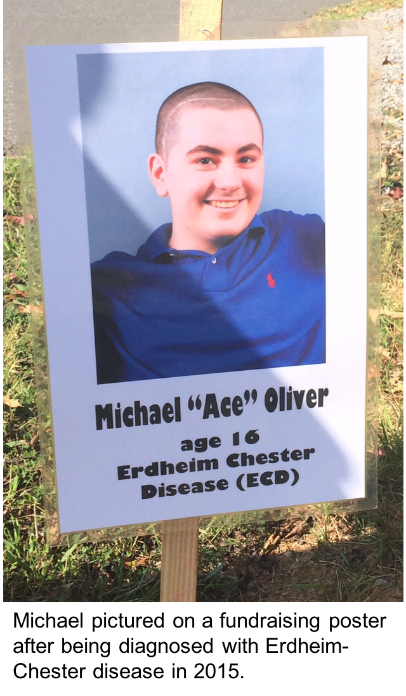
Michael is now 17 years old, but he was 15 when he was finally diagnosed with Erdheim-Chester disease (ECD). ECD is a very rare type of blood cancer that can affect several organs in the body, including the brain and can progress to be life threatening, especially if left untreated. What’s especially unusual about Michael, is that he is one of a handful of young adults and children dealing with a disease that predominately affects men and women in middle age. This makes Michael’s ECD diagnosis even rarer than normal.
הצעיר, תושב סטאפורד שבווירג'יניה, חי כיום, על פי כל הדיווחים, חיים של נער רגיל המתכונן ללימודי סיעוד באוניברסיטה. הוא אוהב לבלות עם שלושת אחיו הצעירים, משחק כדורסל, ואפילו יש לו כלב משלו – "גוסט", תערובת של צ'יוואווה ובישון – שהוא נהנה לטפל בו. מאז שהיה ילד, מייקל סבל ממחלה קשה. עם זאת, כיום מצבו הרפואי יציב הודות להשתתפותו בניסוי קליני בתרופה.
“We had gone to his pediatrician from the time he was twelve because Michael started having some very strange symptoms.” Michael’s mother, Jessica Colon, recalls how the ECD diagnosis journey started. “He was in sports. He was always running, he was always doing things, so the pediatrician just chalked it up as growing pains and just being a teenager.”
Michael suffered from debilitating headaches, light-headiness when being active, bone pain, and was losing weight despite his and his mother’s efforts to ensure he was increasing his protein intake. Of all the symptoms Michael dealt with, it was the amount of water he would drink that was most alarming to Jessica. She remembers, “He started drinking gallons of water. So, I thought maybe he should be tested for diabetes, but the pediatrician said there was nothing wrong with him.”
לבסוף, ביום הראשון של השנה החדשה בשנת 2015, הכאבים והמחלה של מייקל הגיעו לרמות בלתי נסבלות, וג'סיקה לקחה את בנה למרפאת חירום. היא מודה: “פשוט התחננתי בפני האחות במרפאת החירום. אמרתי: ”בבקשה, רק תעזרי לי! אני לא יודעת מה לא בסדר עם הבן שלי, אבל משהו לא בסדר איתו!" הפעם, הצוות הרפואי הקשיב לה.
It would be months before physicians would arrive to Michael’s unlikely, but certain ECD diagnosis after performing pituitary and brain tumor biopsies later that year. Mother’s Day of 2015, when Jessica was in the hospital with her youngest child due to a heart condition and after Michael’s second brain biopsy, ECD was confirmed.
Jessica retells Michael’s reaction to his diagnosis. “I remember clearly when Michael said, ‘At least I know I’m not crazy. Something is wrong with me. I’m glad it’s me and not my brother and sister because I’m strong enough to deal with this.’”
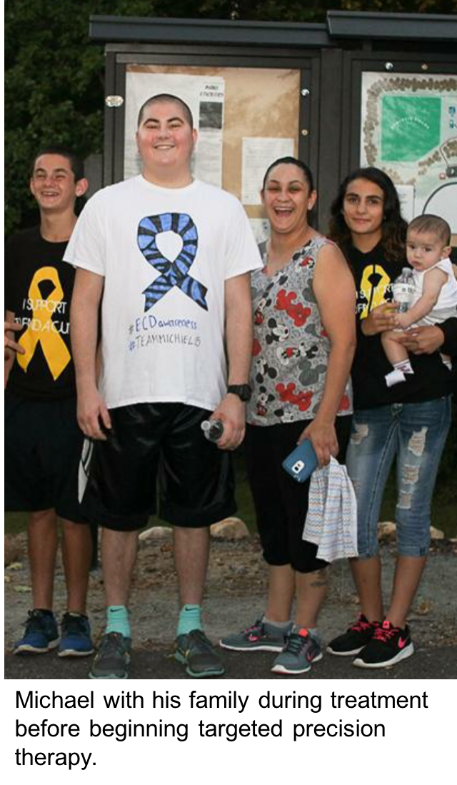 From the time he started getting sick, until being admitted into a clinical trial for treatment in 2016, Michael struggled with the change in his life that this condition forced upon him. Once he finally received a diagnosis, his doctors placed him on steroids and chemotherapy. They believed it would help eradicate the cancer, but matters only worsened. Before the treatment, he could participate in basketball, football, and school. As his illness progressed, hospital stays for biopsies increased, and medications to treat the illness ensued, he needed to quit sports and he missed so much school that he was in jeopardy of not completing high school. Michael recollects what it was like to be so sick. “I would say that time was probably the worst time I’ve experienced being sick. It was difficult because the medicine was making me emotional and then I gained a lot of weight.”
למרבה המזל, המצב השתפר. חבר של המשפחה יצר קשר בין ג'סיקה ומייקל לבין ד"ר אלי ל. דיאמונד, רופא במרכז ההפניה הרפואית של ECD Global Alliance במרכז הסרטן "ממוריאל סלואן-קטרינג". ד"ר דיאמונד התייעץ עם הרופאים של מייקל בנוגע לשינוי תוכנית הטיפול שלו לרפואה מדויקת ניסיונית. הטיפול החדש הראה תוצאות חיוביות בקרב מטופלים בוגרים, וד"ר דיאמונד סבר שזו עשויה להיות אופציה טובה עבור מייקל.
Michael has been on the experimental therapy through Children’s National Medical Center in Washington, D.C. for over a year now and reports optimistic results. Michael enthusiastically reports, “It is the best thing. It’s amazing. It’s targeted. So, there’s much less symptoms but my leg [tumors] have nearly cleared up and my brain tumors are stable, so it’s amazing.”
The ECD Global Alliance (ECDGA), the only non-profit dedicated to supporting those affected by ECD, only has 16 pediatric-diagnosed ECD patients registered out of a total of 442 cases. ECD is not a disease that researchers believe commonly affects children; however, it is related to Langerhans Cell histiocytosis (LCH), which is commonly found in children. There is a belief that ECD could be more prevalent than it is reported due to misdiagnosis, since symptoms can be attributed to other diseases. Therefore, there could be more children and adolescents suffering with ECD than thought.
The Alliance funds research and annual symposia to connect ECD-knowledgeable and interested medical professionals to further understand and treat ECD. It was through the ECDGA’s resources, the family friend had been able to discover Dr. Diamond and it is through the organization that both Michael and Jessica have been able to find emotional support from the organization’s member community.
Although Michael has never connected with another young ECD patient, he has found support through a correspondence relationship with another adult ECD patient. Jessica discusses the relationship. “They were pen pals. They would send emails to each other all the time. They just decided to write one another and then before you know it they were always emailing each other through both their treatments. And not necessarily about ECD but just talking about life. And at that time, it actually really helped because Michael was so depressed. And he was going through so much, and it was hard for me to talk to him, because I didn’t know how he was feeling.”
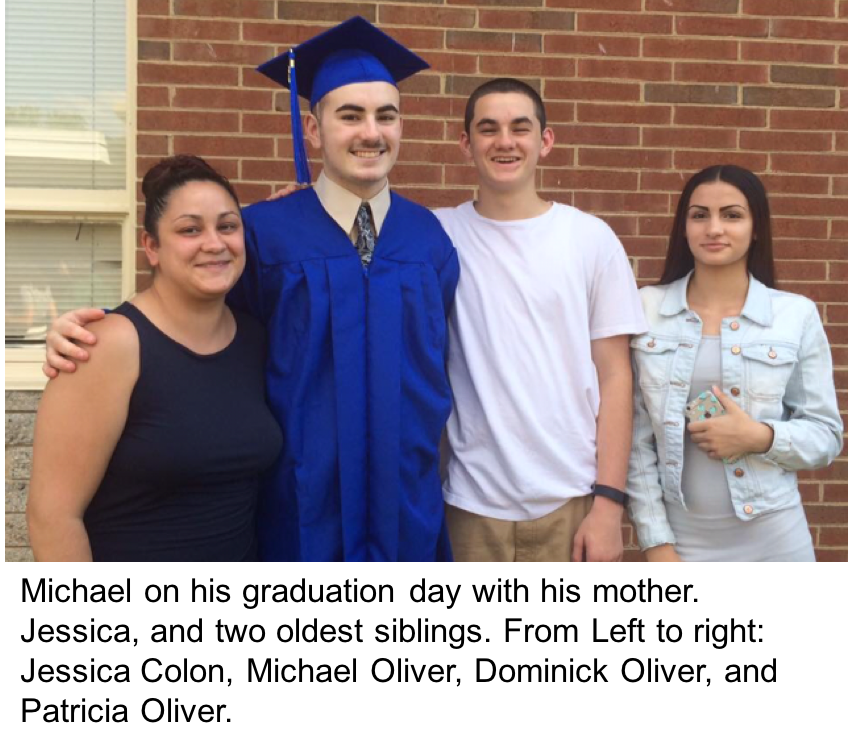
ג'סיקה מצאה נחמה גם בשיחות עם מטפלים אחרים במסגרת “קבוצת המטפלים ב-ECD” של ה-ECDGA, קהילת צ'אט מקוונת המורכבת ממטפלים ב-ECD שנועדה לתמוך זה בזה. ג'סיקה מסבירה מדוע קבוצת התמיכה המקוונת הועילה לה. "היו רגעים שפשוט לא ידעתי יותר מה לעשות. ואם לא הייתי מדברת איתם בשעות הלילה המאוחרות, הייתי פשוט בוכה עד שנרדמתי כמעט כל לילה. אבל הם עזרו לי מאוד."
בנוסף למימון מחקרים, לארגון סימפוזיונים רפואיים וליצירת קשרים בין קהילות הרופאים, החולים והמטפלים בתחום ה-ECD, ה-ECDGA מארגנת גם כנס שנתי של "מפגש חולים ומשפחות", המוקדש לחינוך ולגיבוש קהילתי. מייקל וג'סיקה מצפים שניהם להשתתף באירוע שיתקיים באוקטובר הקרוב בעיר ניו יורק ולפגוש לראשונה אנשים אחרים המושפעים מהמחלה הנדירה ביותר.
החוויה של מייקל וג'סיקה עם ECD הייתה מורכבת ומפרכת, אך שניהם למדו לקחים חשובים לחיים מתוך מה שעברו. מייקל גילה ממדים חדשים של כוחו והתמדתו. הוא מייעץ: “הבנתי שאני מסוגל לעשות יותר דברים ממה שאני חושב שאני מסוגל. ואני יכול לומר את אותו הדבר לאחיי. בהחלט ייתכן שלא הייתי מסיים את התיכון, אבל הצלחתי. אז התחלתי לומר לאחיי: אל תתנו לתבוסה להביס אתכם.”
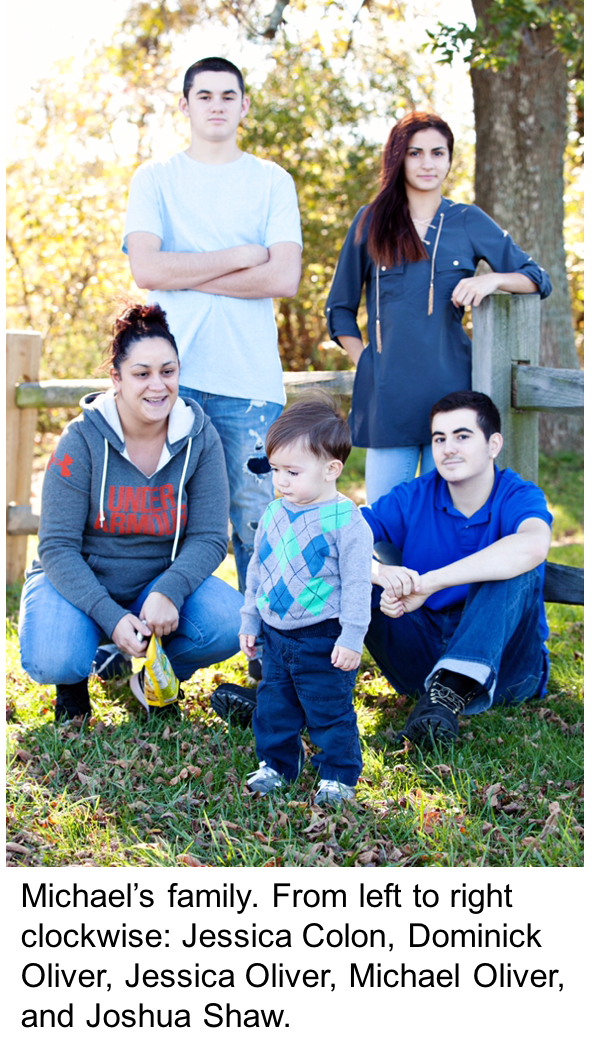
ג'סיקה גם אימצה תפיסה חדשה של התמדה בתור אם. היא מייעצת להורים אחרים המתמודדים עם ילד חולה קשה: “גם אם אתם לוקחים את הילד לרופא, וגם אם אומרים לכם שאין שום בעיה, ואתם באמת, באמת מרגישים שמשהו לא בסדר – אל תתייאשו. פשוט סמכו על האינטואיציה שלכם ואל תתייאשו. אל תקבלו את הטענה שאין שום דבר לא בסדר עד שלא מיציתם באמת את כל האפשרויות, ועשיתם באמת את כל הבדיקות ועשיתם הכל.”
אם ברצונכם ללמוד עוד על מחלת ארדהיים-צ'סטר, או אם אתם סבורים שאתם או מישהו הקרוב ללבכם עלולים לסבול ממחלה זו, בקרו באתר www.Erdheim-Chester.org. אתר האינטרנט של ECD Global Alliance מהווה את המקור המוביל עבור חולים, בני משפחה ואנשי מקצוע בתחום הרפואה, המאפשר להם ליצור קשר זה עם זה ולקבל סיוע במאבק במחלת ארדהיים-צ'סטר.