



Ressurser innen hematologi
ECD is an ultra-rare type of blood cancer that is difficult to diagnose and can manifest in a variety of complex ways. With Erdheim-Chester Disease likely being underdiagnosed it is imperative to raise awareness around the world, especially in the medical community. Hematologists, together with other clinicians, pathologists, and radiologists, play a vital role in identifying ECD. If doctors can accurately and quickly recognize ECD in a patient, there are viable FDA-approved and off-label treatments available to improve quality of life, slow the progression of the life-threatening disease, and in some cases, even possibly reverse the damage done by the disorder. The key to a successful or more positive outcome is early diagnosis.
Takk til helsepersonellet som har bidratt med informasjon og vurderinger for å støtte ECDGAs opplysningsarbeid. Deres engasjement for samfunnet vil gjøre en forskjell i livene til pasienter og familier overalt.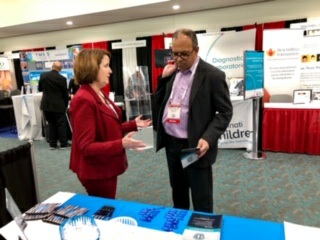
Viktige punkter for hematologer
- None of the pathologic changes are unique to ECD – clinical and radiographic features are key to diagnosis.
- Man bør ha høy mistanke om ECD hos pasienter med typisk “hårete nyre”, retroperitoneal eller beninvolvering, særlig ved samtidig diabetes insipidus.
- Det er svært viktig å gjennomføre en PET-CT-undersøkelse fra toppen av hodet til tåene (hele kroppen) for å påvise diametafysær involvering rundt kneleddet og undersøke om flere organer er berørt.
- ECD kan forekomme samtidig med Langerhans-cellehistiocytose (LCH) eller myeloid svulst.
- Molecular studies increasingly play a role in diagnosis and management.
Hematologer med erfaring innen ECD
Ronald S. Go, MD
E-post: go.ronald@mayo.edu
Gaurav Goyal, MD
E-post: ggoyal@uabmc.edu
Paul Hendrie, MD, PhD
E-post: phendrie@uw.edu