










Ressourcen zur Hämatologie
ECD is an ultra-rare type of blood cancer that is difficult to diagnose and can manifest in a variety of complex ways. With Erdheim-Chester Disease likely being underdiagnosed it is imperative to raise awareness around the world, especially in the medical community. Hematologists, together with other clinicians, pathologists, and radiologists, play a vital role in identifying ECD. If doctors can accurately and quickly recognize ECD in a patient, there are viable FDA-approved and off-label treatments available to improve quality of life, slow the progression of the life-threatening disease, and in some cases, even possibly reverse the damage done by the disorder. The key to a successful or more positive outcome is early diagnosis.
Vielen Dank an die medizinischen Fachkräfte, die Informationen und Erfahrungsberichte zur Verfügung gestellt haben, um die Aufklärungsarbeit der ECDGA zu unterstützen. Ihr Engagement für die Gemeinschaft wird das Leben von Patienten und Familien überall positiv beeinflussen.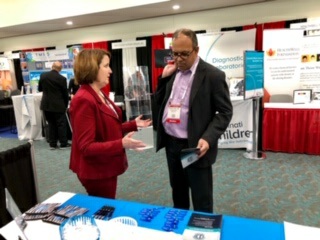
Wichtige Punkte für Hämatologen
- None of the pathologic changes are unique to ECD – clinical and radiographic features are key to diagnosis.
- Bei Patienten mit typischer “haariger Niere”, retroperitonealer oder knochenbetroffener Ausprägung sollte ein hoher Verdacht auf ECD bestehen, insbesondere bei gleichzeitigem Diabetes insipidus.
- Es ist äußerst wichtig, eine PET-CT-Untersuchung vom Scheitel bis zu den Zehen (Ganzkörper) durchzuführen, um eine Beteiligung der Diametaphyse im Bereich des Kniegelenks zu erfassen und eine Beteiligung mehrerer Organe abzuklären.
- ECD kann gemeinsam mit einer Langerhans-Zell-Histiozytose (LCH) oder einem myeloischen Neoplasma auftreten.
- Molecular studies increasingly play a role in diagnosis and management.
Hämatologen mit ECD-Erfahrung
Dr. med. Ronald S. Go
E-Mail: go.ronald@mayo.edu
Dr. med. Gaurav Goyal
E-Mail: ggoyal@uabmc.edu
Dr. med. Paul Hendrie, PhD
E-Mail: phendrie@uw.edu