








Erdheim-Chester Disease (ECD) is a rare histiocytic disorder that often goes undiagnosed for years due to its varied and complex symptoms. Early recognition by both patients and medical professionals is crucial for timely intervention and improved outcomes.
Pourquoi un diagnostic précoce est-il important ?
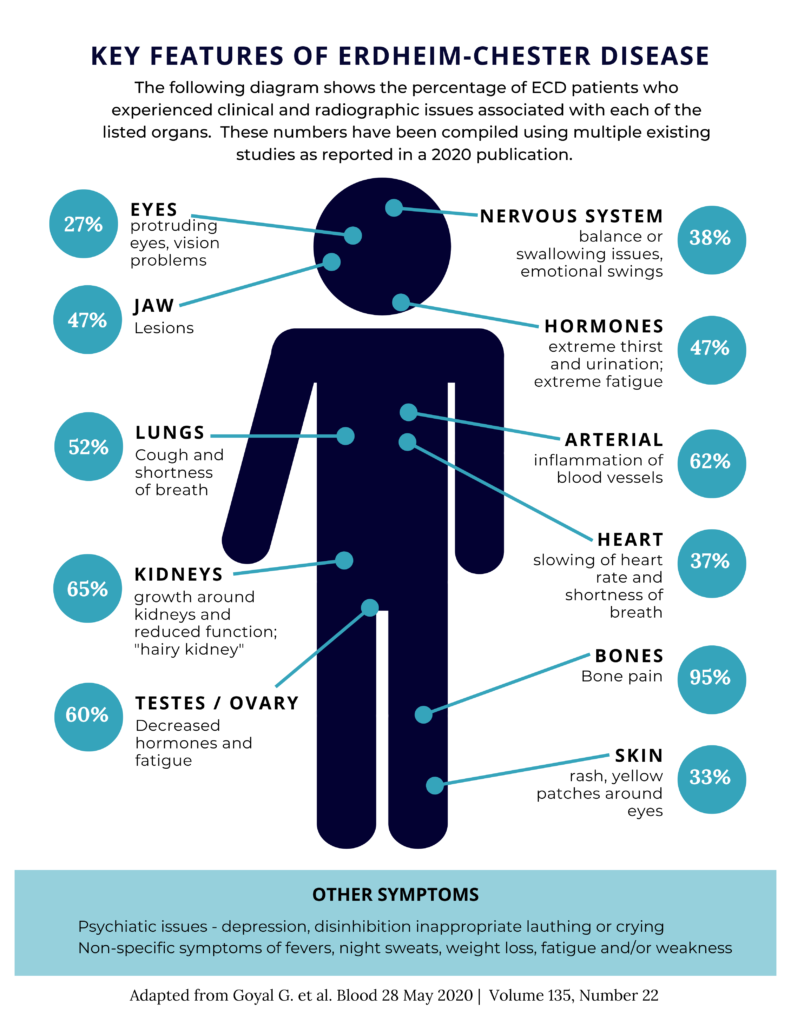
Many patients with ECD experience symptoms for years before receiving a proper diagnosis. Since ECD can affect multiple organs—including, but not limited to bones, kidneys, brain, and heart—misdiagnosis is common. The earlier a patient is diagnosed, the sooner they can access specialized care and potential treatment options that may slow disease progression.
Signes clés à l'attention des professionnels de santé
Mesures que les patients peuvent prendre
Patients with unexplained multi-organ issues that are consisted with ECD symptoms should talk to their doctor. If ECD is suspected, working with a multidisciplinary team experienced in histiocytic disorders is essential.
Comment la sensibilisation contribue à la recherche et aux traitements
En sensibilisant davantage le public à la maladie d'Erdheim-Chester, davantage de patients pourront bénéficier d'un diagnostic précoce et avoir accès à des soins adaptés. Cela favorise également la poursuite des recherches sur cette maladie, ce qui permet de faire progresser les traitements et d'améliorer la qualité de vie des personnes touchées.
L'Alliance mondiale contre la maladie d'Erdheim-Chester (ECDGA) ne fournit ni conseils médicaux, ni diagnostics, ni traitements. L'ensemble du contenu est présenté à titre purement informatif. Veuillez consulter un professionnel de santé pour toute question d'ordre médical.