



Por qué es importante el diagnóstico precoz de la enfermedad de Erdheim-Chester: la historia de Marc
Recibir un diagnóstico de una enfermedad rara como la enfermedad de Erdheim-Chester (ECD) puede resultar abrumador. Para muchas personas, el camino para encontrar respuestas es largo, confuso y, a menudo, está marcado por años de incertidumbre. Sin embargo, hay historias que nos recuerdan por qué son importantes la sensibilización, las pruebas oportunas y una actitud positiva. Hoy tenemos el honor de compartir una de esas historias.
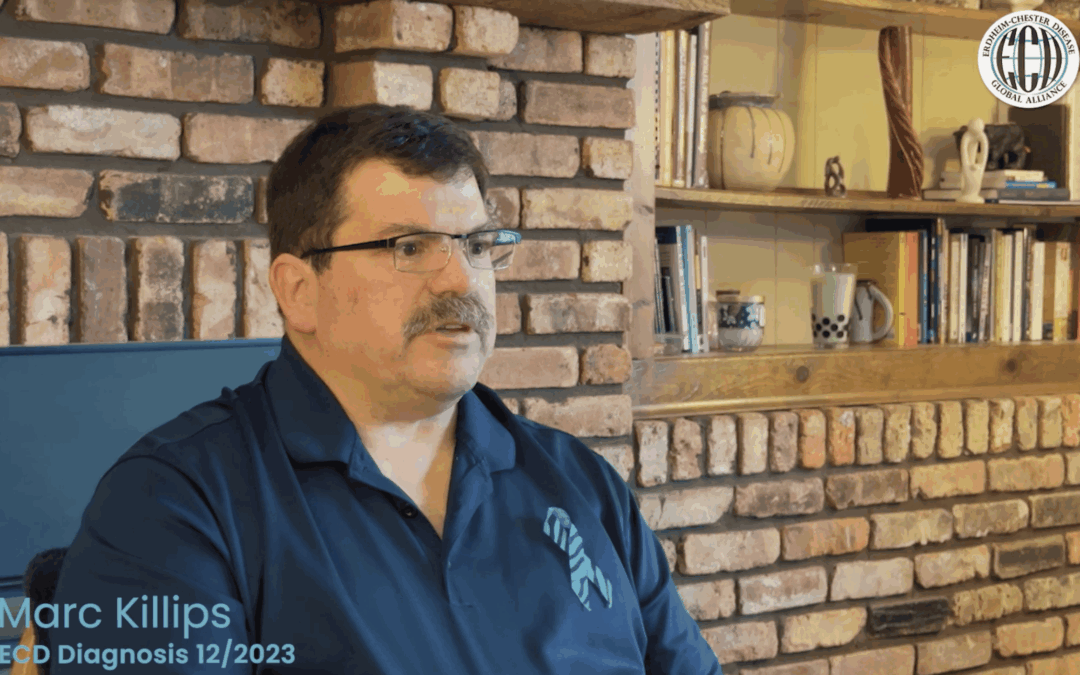
In a series of three short video interviews, Marc Killips talks candidly about his journey to diagnosis and what early detection has meant for his life. His experience is a powerful reminder of why early diagnosis makes a difference in managing this complex and rare disease—and how staying positive can help along the way.
Mira la historia de Marc
We invite you to watch this brief video interview to hear Marc Killips’ journey in his own words. His experience is a testament to the power of early diagnosis, quick action, and the strength that comes from staying positive and finding community support.
Una vida interrumpida, pero no descarrilada
Marc describes how his diagnosis came somewhat unexpectedly. “I went in because of equilibrium issues and tingling in my hands,” he shares. “It wasn’t intense. It was just… strange.” Like many, Marc initially thought it was something minor. But because his healthcare team took his concerns seriously and acted quickly with further testing, he received a diagnosis of ECD before the disease had significantly progressed.
“Tuve la suerte de que actuaran con rapidez”, dice Marc. “Recibir respuestas cuanto antes supuso una gran diferencia para mí”.”
El poder de saber escuchar, actuar a tiempo y mantener una actitud positiva
In the first video short, Marc reflects on the role his care team played in catching ECD early. “They listened,” he explains. “Even when things didn’t make sense, they kept digging.” Because of their persistence—and his own determination to stay positive—Marc was able to get an early diagnosis, which has made managing the disease much more achievable.
His story highlights the importance of not ignoring unusual symptoms, advocating for yourself, and staying hopeful, even when things are uncertain. Early testing and a positive mindset can lead to faster answers and better outcomes.
Vivir con conocimiento, apoyo y esperanza
In the second segment, Marc talks about how receiving his diagnosis early gave him time to learn, connect, and plan. “It gave me the opportunity to understand what I’m dealing with,” he says. “I found the ECD Global Alliance early in my journey, and knowing I wasn’t alone made a huge difference.”
Marc siguió centrándose en seguir adelante, y atribuye al apoyo de la comunidad de la ECDGA el haberle ayudado a mantenerse optimista e informado.
Avanzar con confianza y optimismo
En el último vídeo, Marc comparte su punto de vista actual. “No es fácil”, afirma. “Pero siento que cuento con un equipo y que tengo tiempo. Eso lo ha cambiado todo”.”
Marc believes that staying positive has played a key role in how he’s approached his diagnosis and treatment. “You have to stay hopeful,” he says. “Getting tested early gave me time—time to understand, time to connect, and time to plan for the future.”
His story underscores the importance of early diagnosis—not just for patients, but for their families, care teams, and everyone impacted by ECD. The sooner ECD is identified and testing is completed, the sooner patients can access specialized care and the support they need.
La Alianza Global contra la Enfermedad de Erdheim-Chester (ECDGA) no ofrece asesoramiento médico, diagnósticos ni tratamientos. Todo el contenido tiene carácter meramente informativo. Si tiene alguna duda médica, consulte a un profesional sanitario.