








Pourquoi un diagnostic précoce est essentiel dans la maladie d'Erdheim-Chester : l'histoire de Marc
Recevoir un diagnostic de maladie rare comme la maladie d’Erdheim-Chester (ECD) peut être bouleversant. Pour beaucoup, le chemin vers la réponse est long, semé d’embûches et souvent marqué par des années d’incertitude. Mais certaines histoires nous rappellent pourquoi la sensibilisation, un dépistage précoce et une attitude positive sont essentiels. Aujourd’hui, nous avons l’honneur de partager l’une de ces histoires.
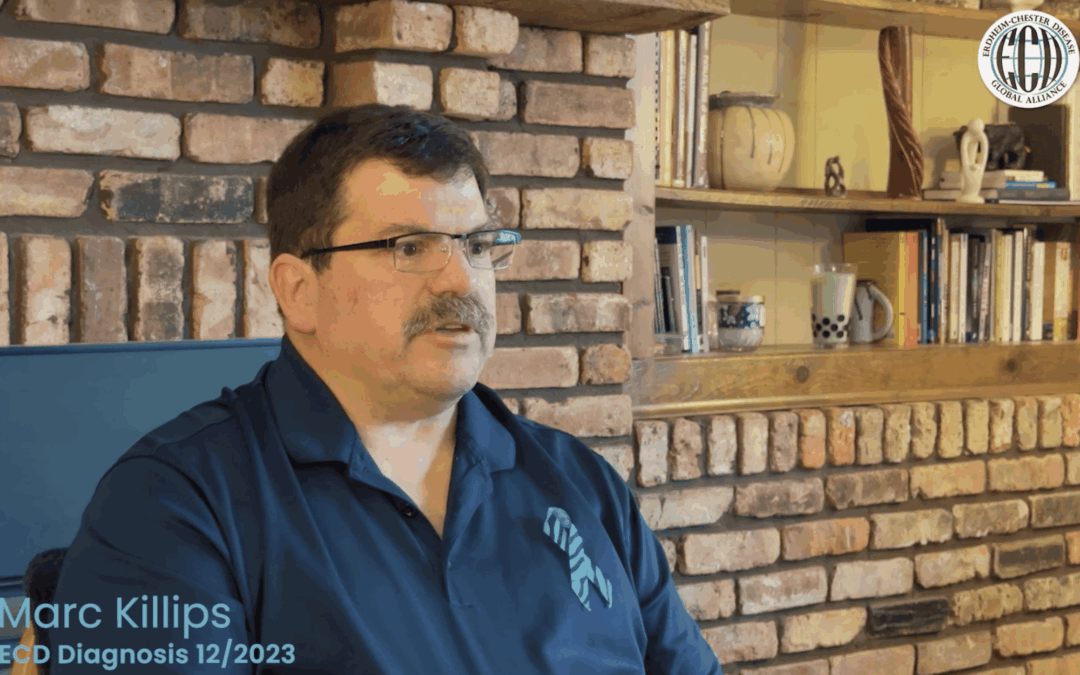
In a series of three short video interviews, Marc Killips talks candidly about his journey to diagnosis and what early detection has meant for his life. His experience is a powerful reminder of why early diagnosis makes a difference in managing this complex and rare disease—and how staying positive can help along the way.
Découvrez l'histoire de Marc
We invite you to watch this brief video interview to hear Marc Killips’ journey in his own words. His experience is a testament to the power of early diagnosis, quick action, and the strength that comes from staying positive and finding community support.
Une vie interrompue, mais pas compromise
Marc describes how his diagnosis came somewhat unexpectedly. “I went in because of equilibrium issues and tingling in my hands,” he shares. “It wasn’t intense. It was just… strange.” Like many, Marc initially thought it was something minor. But because his healthcare team took his concerns seriously and acted quickly with further testing, he received a diagnosis of ECD before the disease had significantly progressed.
“ J’ai eu de la chance qu’ils aient réagi rapidement ”, explique Marc. “ Le fait d’obtenir des réponses le plus tôt possible a fait toute la différence pour moi. ”
Le pouvoir de l'écoute, de l'action rapide et de l'optimisme
In the first video short, Marc reflects on the role his care team played in catching ECD early. “They listened,” he explains. “Even when things didn’t make sense, they kept digging.” Because of their persistence—and his own determination to stay positive—Marc was able to get an early diagnosis, which has made managing the disease much more achievable.
His story highlights the importance of not ignoring unusual symptoms, advocating for yourself, and staying hopeful, even when things are uncertain. Early testing and a positive mindset can lead to faster answers and better outcomes.
Vivre avec des connaissances, du soutien et de l'espoir
In the second segment, Marc talks about how receiving his diagnosis early gave him time to learn, connect, and plan. “It gave me the opportunity to understand what I’m dealing with,” he says. “I found the ECD Global Alliance early in my journey, and knowing I wasn’t alone made a huge difference.”
Marc a continué à se tourner vers l'avenir, et il estime que le soutien de la communauté de l'ECDGA l'a aidé à rester optimiste et bien informé.
Aller de l'avant avec confiance et optimisme
Dans la dernière vidéo, Marc nous fait part de son point de vue aujourd’hui. “ Ce n’est pas facile ”, dit-il. “ Mais j’ai l’impression d’avoir une équipe à mes côtés, et j’ai du temps. C’est ce qui a tout changé. ”
Marc believes that staying positive has played a key role in how he’s approached his diagnosis and treatment. “You have to stay hopeful,” he says. “Getting tested early gave me time—time to understand, time to connect, and time to plan for the future.”
His story underscores the importance of early diagnosis—not just for patients, but for their families, care teams, and everyone impacted by ECD. The sooner ECD is identified and testing is completed, the sooner patients can access specialized care and the support they need.
L'Alliance mondiale contre la maladie d'Erdheim-Chester (ECDGA) ne fournit ni conseils médicaux, ni diagnostics, ni traitements. L'ensemble du contenu est présenté à titre purement informatif. Veuillez consulter un professionnel de santé pour toute question d'ordre médical.