



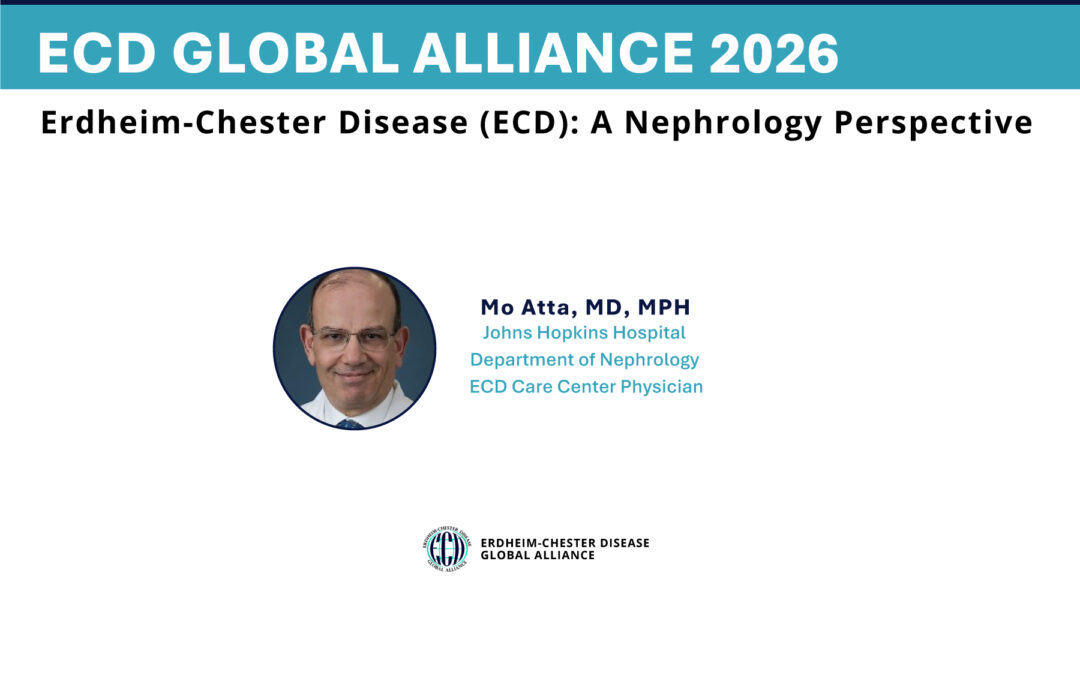
In this educational webinar, Dr. Mohamed G. Atta, MD, a kidney specialist at Johns Hopkins Hospital, an ECD referral care center, gives a detailed look at how Erdheim-Chester Disease (ECD) can affect the kidneys and what research has taught us about kidney health in people living with this rare disease.
Dr. Atta explains how ECD can affect the kidneys using easy-to-understand visuals and real-life examples. This helps patients and families learn why kidney problems are common in ECD and how they can change over time.
In this webinar, you will learn about:
- How ECD affects the kidneys and urinary system
- What doctors mean by the “hairy kidney” seen on scans
- Why kidney problems often have no symptoms and can be found late
- How tissue biopsies and molecular tests help diagnose ECD
- How kidney function may change over time in people with ECD
- Factors that can make kidney disease worse or affect outcomes
- Past and modern approaches to caring for kidneys in ECD
- How to manage kidney complications like blockages, high blood pressure, and kidney failure
- Experiences with dialysis and kidney transplants in ECD patients
- Why a strong partnership between patients and doctors is so important in rare diseases
The webinar also shows how research and new targeted treatments have improved outcomes for many people with ECD, while stressing the need for awareness, early detection, and specialized care.