













Symptoms
The symptoms of ECD depend on which organ(s) are involved, which varies with each patient and also differs between patients. For this reason, ECD symptoms can be different for each patient.
A single patient may have a different combination of these symptoms, along with others. Few patients have all the above symptoms. This is partly what makes ECD difficult to diagnose. An ECD diagnosis requires a review of symptoms in conjunction with imaging (PET-CT and MRI if available) and biopsies performed by a knowledgeable medical team.
Anyone who suspects they may have ECD should seek the help of a knowledgeable healthcare provider. Earlier diagnosis will potentially give patients the best chance for a successful treatment plan.
In late 2018, the ECD Patient Registry resulted in the following symptom assessment article. Findings include a percentage table of patient-reported symptoms. See A scale for patient-reported symptom assessment for patients with Erdheim-Chester disease to learn more.
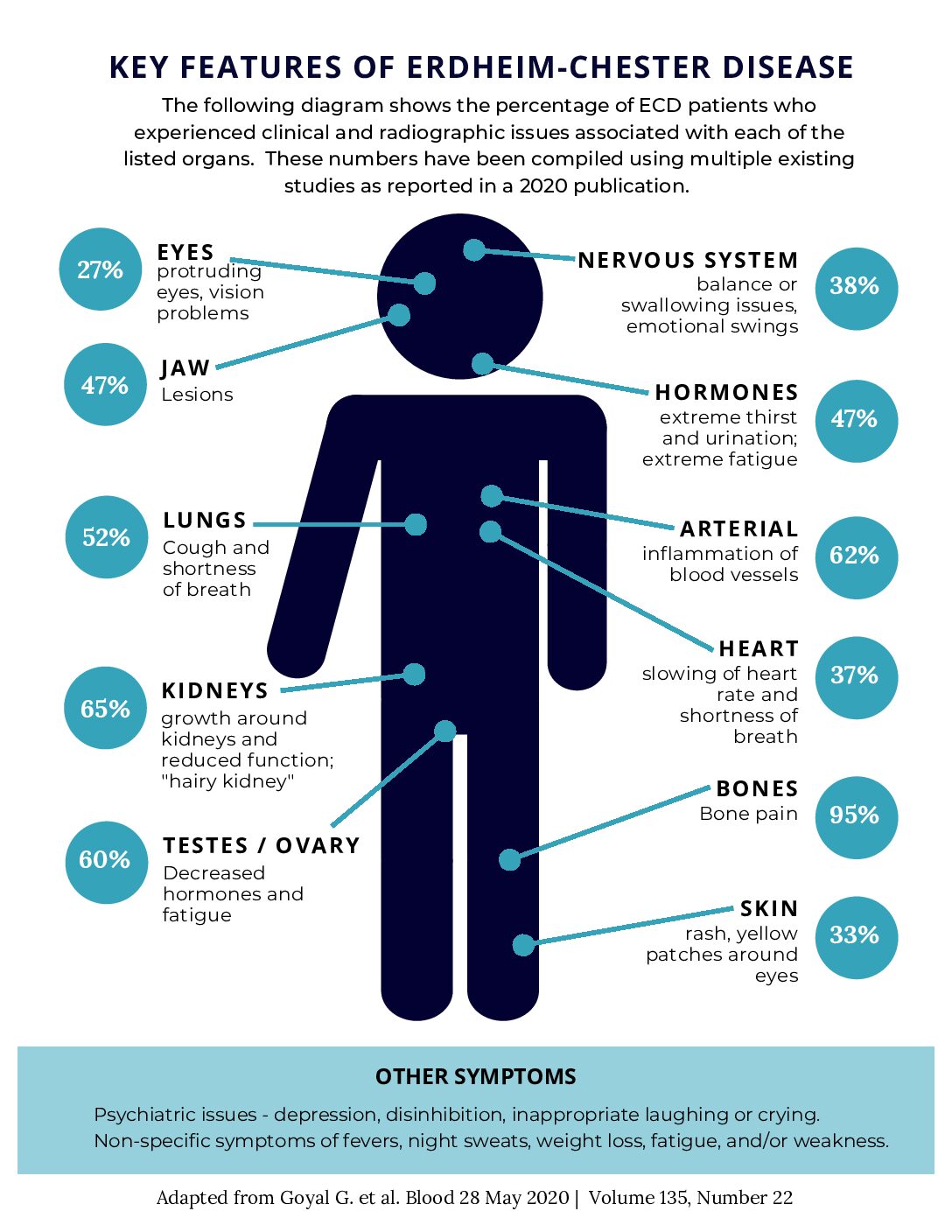
Click to view full-size.
- Bone Pain. The most common symptom reported is bone pain in the long bones of the legs on both sides (bilateral). Leg pain occurs most often in the knees, shins, and ankles. Arm pain can occur rarely and is most often in the upper arms. More than 90% of patients with ECD describe having pain, but it is important to note that some patients never have bone pain symptoms and that the location of pain in the body can be variable.
- General malaise and other non-specific symptoms. Many ECD patients report fatigue, weakness, weight loss, fever, night sweats, muscle and joint aches, and/or feelings of discomfort. Some patients report flu-like symptoms that fluctuate and never really fully go away.
- Neurological Symptoms. When ECD impacts the brain, balance issues may occur, making walking difficult, with some patients reporting falls. Other symptoms of neurological involvement include slurred speech, swallowing problems, memory concerns, emotional and/or behavior changes, and/or other changes in usual disposition. Involuntary, rapid eye movements have also been seen as a neurological symptom.
- Excessive thirst and urination (Arginine Vasopressin Deficiency, also called Diabetes Insipidus or DI). This is sometimes one of the first symptoms ECD patients encounter. Once DI is identified, it can be easily treated with a medicine known as desmopressin, which can be given via an injection (shot), a pill, or a nasal spray.
- Hormonal changes. ECD patients sometimes report changes in sexual libido or orgasm, as well as irregularities in menstrual periods for females. These symptoms occur as the result of disease involvement in the pituitary gland. Less often, secretions from the nipples (galactorrhea) in the absence of pregnancy or childbirth can also occur.
- Kidney issues. ECD can affect the retroperitoneum (tissue surrounding kidneys and large blood vessels like the aorta) and kidneys. Lower back, flank or abdominal pain can be associated with kidney issues. Imaging tests often report a ‘hairy-like kidney, or a doctor might discover reduced kidney function. ECD affecting the blood vessels around the kidneys can lead to elevated blood pressure.
Last Updated:03/17/2026