













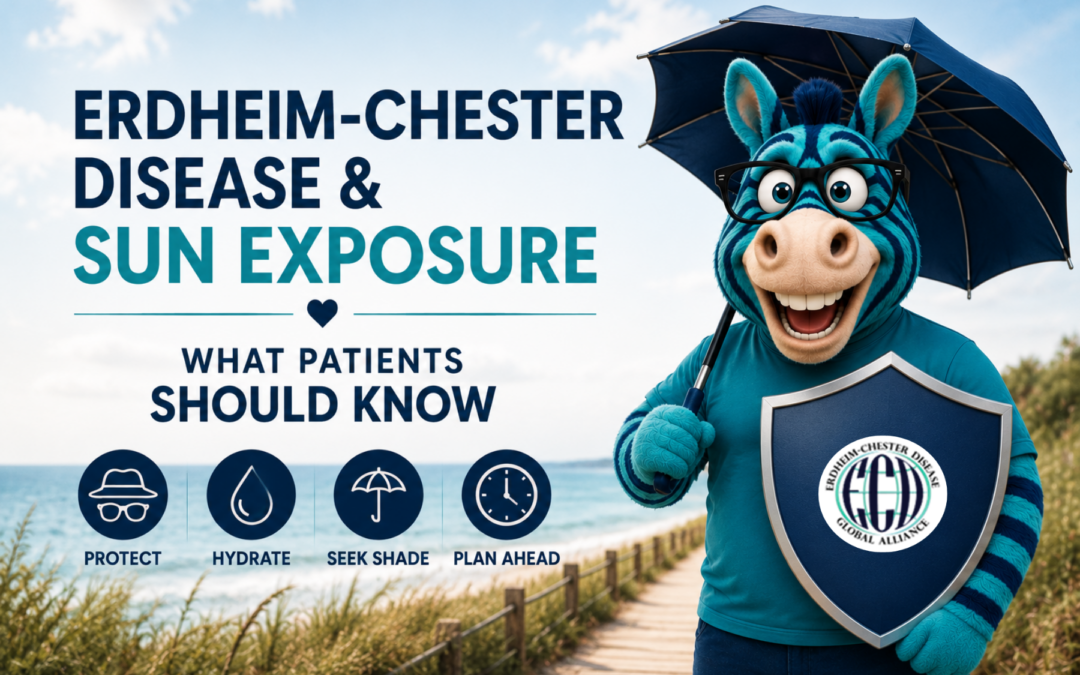
For many people, sunshine means outdoor activities, vacations, and time spent with family and friends. For individuals living with Erdheim-Chester Disease (ECD), however, sun exposure can sometimes present unique challenges that deserve attention.
While ECD itself does not automatically make a person more sensitive to sunlight, many patients experience health issues, treatment side effects, or medical conditions that can increase the risks associated with prolonged sun exposure. Understanding these risks and taking simple precautions can help patients enjoy outdoor activities safely.
Why Sun Exposure Matters
Many ECD patients receive treatments that may increase sensitivity to sunlight. Certain targeted therapies commonly used to manage symptoms can make the skin more vulnerable to sunburn or irritation.
In addition, ECD can affect multiple organs throughout the body. Some patients experience cardiovascular involvement, kidney disease, endocrine dysfunction, chronic fatigue, among others. Excessive heat and dehydration can place additional stress on these systems and may worsen symptoms.
Common Concerns for ECD Patients
Heat Intolerance
Regulating body temperature is important. High temperatures and humidity may lead to:
- Increased fatigue
- Dizziness
- Headaches
- Weakness
- Difficulty concentrating
Dehydration Risks
Dehydration can occur quickly during outdoor activities, particularly during the summer months. Patients with kidney involvement , should be especially mindful of maintaining adequate hydration.
Medication-Related Sun Sensitivity
Some medications may increase the skin’s sensitivity to ultraviolet (UV) radiation. This can result in:
- Faster sunburns
- Skin irritation
- Rashes
- Increased discomfort during prolonged outdoor exposure
Patients should discuss any concerns about sun sensitivity with their healthcare team and review medication information for specific precautions.
Tips for Safe Sun Exposure
Stay Hydrated
Drink water regularly throughout the day, even before feeling thirsty. When spending extended periods outdoors, bring water and take frequent hydration breaks.
Avoid Peak Sun Hours
The sun’s UV rays are strongest between 10 a.m. and 4 p.m. When possible, schedule outdoor activities during the early morning or evening.
Use Sunscreen
Choose a broad-spectrum sunscreen with SPF 30 or higher and reapply every two hours, or more frequently if swimming or sweating.
Dress for Protection
Protective clothing can significantly reduce UV exposure. Consider:
- Lightweight long-sleeve shirts
- Wide-brimmed hats
- UV-protective clothing
- Sunglasses with UV protection
Listen to Your Body
Pay attention to signs of overheating or fatigue. If you begin feeling dizzy, weak, nauseated, or excessively tired, seek shade, hydrate, and cool down immediately.
Enjoying Life Outdoors
Living with ECD does not mean avoiding the outdoors. Many patients continue to walk, garden, travel, participate in fundraising events, and enjoy recreational activities. The key is planning ahead and understanding your body’s unique needs.
Whether you’re participating in an ECDGA Fun Run, supporting awareness events, or simply spending time with loved ones, taking sensible precautions can help you stay safe while enjoying the benefits of fresh air and sunshine.
You Are Not Alone
Questions about managing daily life with ECD are common, and every patient’s experience is different. The Erdheim-Chester Disease Global Alliance (ECDGA) is committed to providing education, support, and connections that help patients and families navigate life with this rare disease.
By sharing information, funding research, and building community, we can help ensure that no one faces ECD alone.