



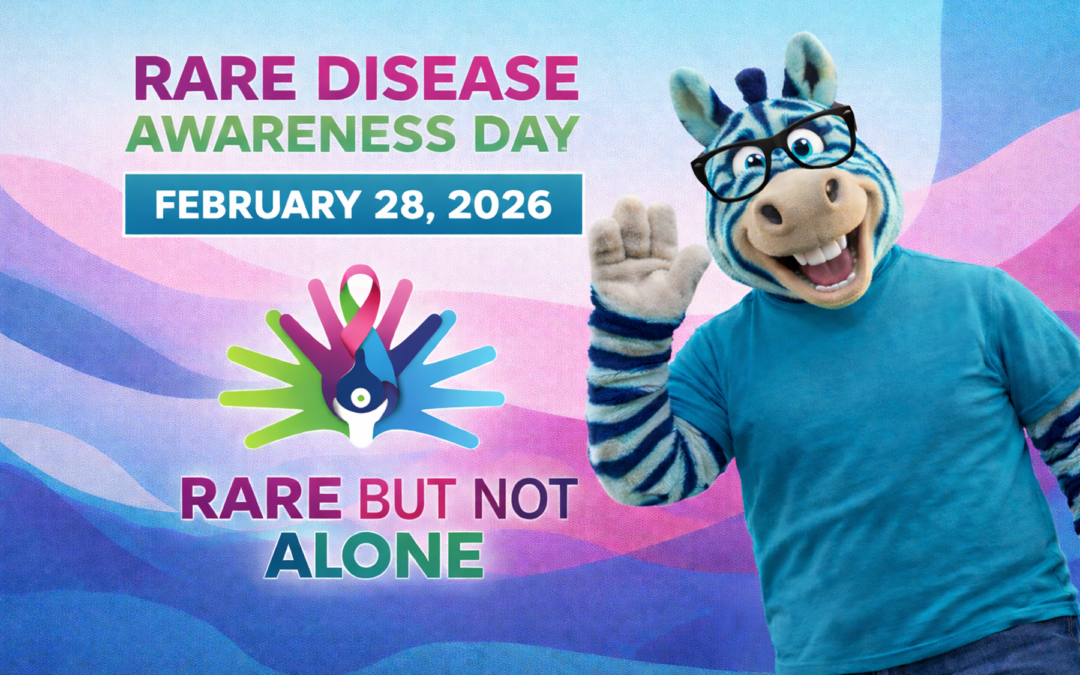
Rare Disease Day is observed every year on the last day of February to raise awareness for the millions of people worldwide living with rare diseases.
ECDGA is proud to stand with individuals and families navigating rare diagnoses—offering support, education, and hope.
Ziggy is here to guide you through what rare disease really means, why awareness matters, and how you can help make a difference.
See the Information for Each One Below
- Learn About Rare Disease
- Support ECDGA
- Share Our Message
Rare Disease Day: Why It Matters
Rare Disease Day, observed each year on the last day of February, shines a light on the millions of people worldwide who are living with a rare disease. While each rare condition may affect a small number of individuals, together rare diseases impact more than 300 million people globally—families, caregivers, and entire communities.
For many patients, the journey to diagnosis can take years. Limited awareness, few specialists, and scarce research funding often mean delayed diagnoses and fewer treatment options. Rare Disease Awareness Day helps change that by amplifying patient voices, encouraging earlier diagnosis, and promoting investment in research and innovation.
This day is also about connection and solidarity. It reminds those living with rare diseases that they are rare, but not alone. Advocacy organizations, researchers, healthcare professionals, and supporters come together to share stories, educate the public, and push for policies that improve access to care and life-saving therapies.
By raising awareness, we foster understanding, reduce isolation, and help build a future where every person—no matter how rare their condition—has access to timely diagnosis, effective treatment, and compassionate support.
Why Supporting ECDGA Matters on Rare Disease Day
Rare Disease Day is about visibility, advocacy, and hope—and the Erdheim-Chester Disease Global Alliance (ECDGA) plays a vital role in making all three a reality. ECDGA is dedicated to supporting patients and families affected by Erdheim-Chester Disease (ECD), an ultra-rare and often life-threatening condition that has historically been misunderstood and underdiagnosed.
ECDGA bridges critical gaps that many rare disease patients face. The organization connects patients to knowledgeable specialists, promotes earlier and more accurate diagnosis, and supports cutting-edge research aimed at improving treatments and outcomes. For individuals navigating a rare disease journey, ECDGA provides something equally important: community. No one should have to face a rare diagnosis alone, and ECDGA ensures patients and caregivers feel informed, supported, and empowered.
On Rare Disease Day, ECDGA represents the heart of the rare disease movement—turning awareness into action. By advocating for research funding, educating healthcare professionals, and amplifying patient voices, ECDGA helps ensure that rare diseases are recognized, understood, and prioritized.
Supporting ECDGA means supporting progress, compassion, and hope. It means standing with the rare disease community and affirming a powerful truth: rare patients matter, rare diseases matter, and together, we are rare—but not alone.
How You Can Help Share Rare Disease Awareness
Raising awareness starts with individuals—patients, caregivers, families, and supporters—using their voices to make an impact. Constituents play a powerful role in spreading awareness and helping rare diseases be seen, understood, and prioritized.
One of the simplest ways to help is by sharing information. Posting on social media, sharing educational resources, or amplifying stories from ECDGA helps reach new audiences and sparks important conversations. Using awareness hashtags and participating in Rare Disease Day campaigns can greatly extend that reach.
Constituents can also engage their communities by talking with friends, coworkers, schools, and local organizations about rare diseases and the challenges patients face. Personal stories are especially impactful—they put a human face on rare conditions and foster empathy and understanding.
Finally, supporters can take action by participating in awareness events, fundraising, or advocating for better research funding and healthcare policies. Every share, conversation, and action helps move rare diseases out of the shadows.
Together, these efforts remind the world that while rare diseases may be uncommon, the people affected by them are not alone—and awareness can lead to real change.